
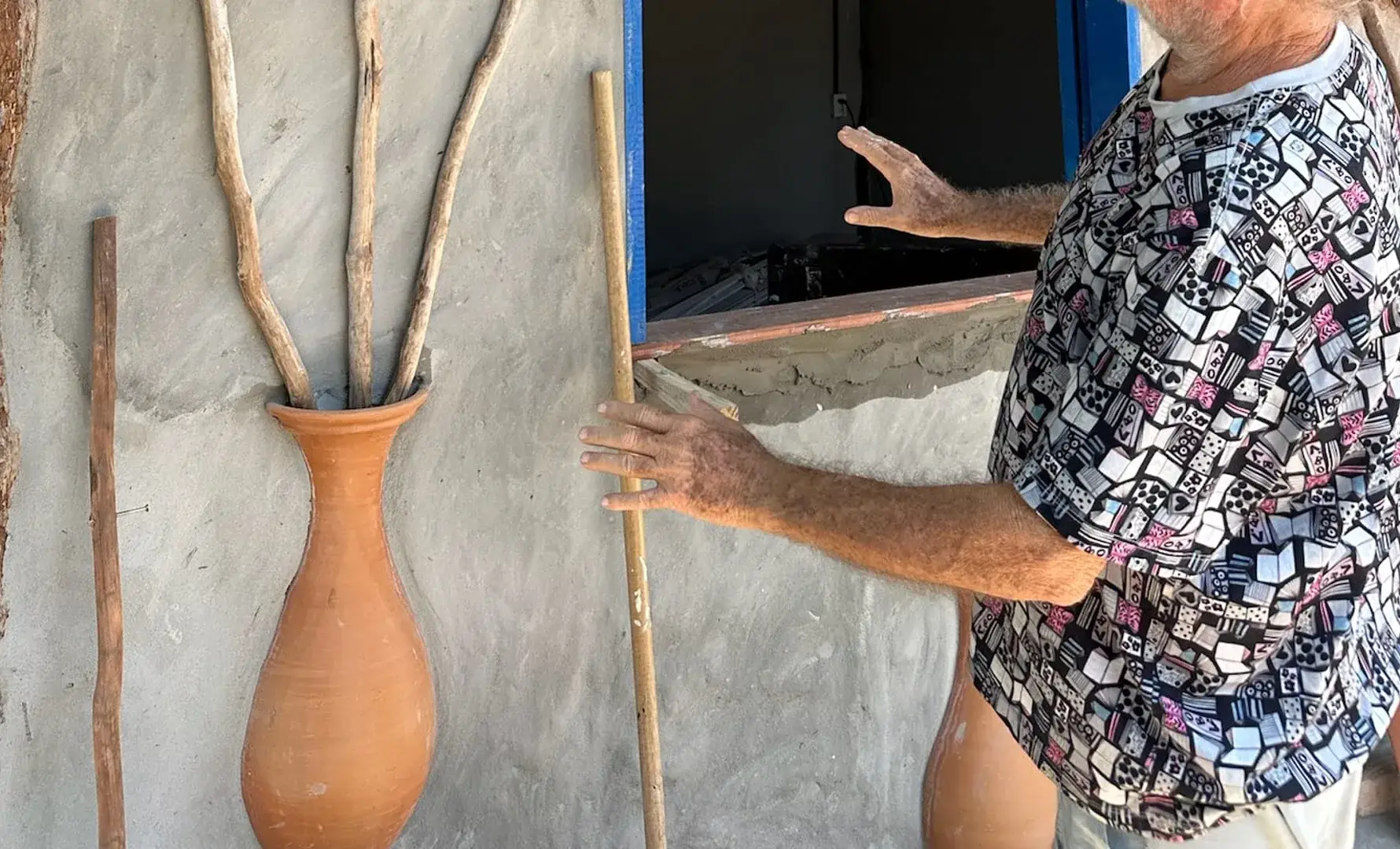
Who built the Rancho
The story of Buna
In the 1980s, a man arrived in Atins, then a village with no power and no road, and little by little built his own retreat. In the early 2000s, that retreat became a pousada.
Staff rated 9.1 on Booking.com · 137 reviews
From a fishing village to the Rancho
The beginning
Buna discovers Atins
When Buna arrived, Atins was a small fishing village with no cars and no tourism. He bought a plot of land there with the idea of building a personal retreat, far from the city.
All around, there was nothing but dunes, the salt wind and the silence. The plot was a stretch of coconut grove beside the igarapé, a local creek. Buna spent his first years simply listening to the place: where the sun rose, how far the tide came in, what shade the afternoon brought.
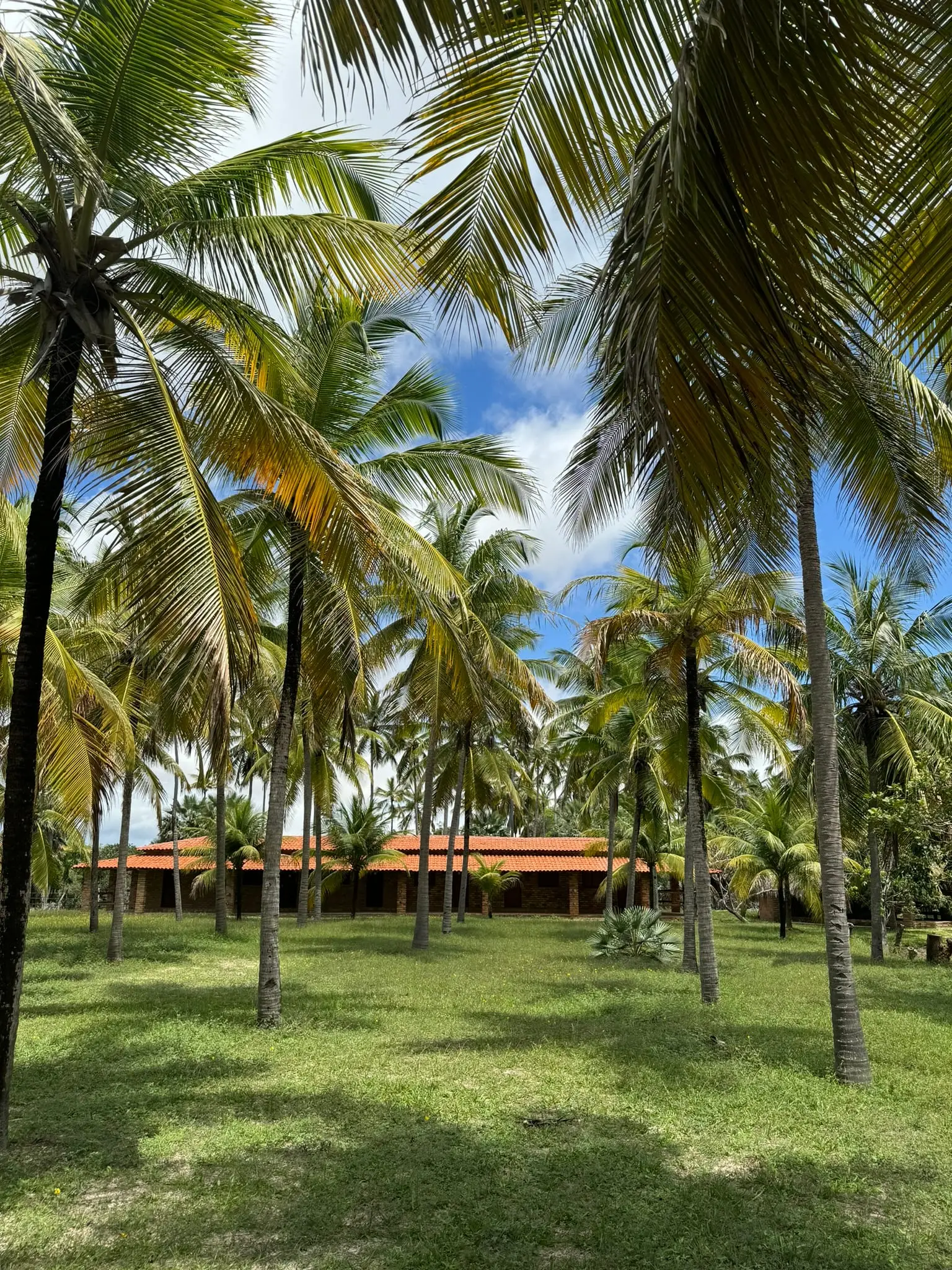
Building the Rancho
Wood, brick and patience
Over time, the idea grew into a guesthouse to welcome friends. With no architect, Buna designed and built the first chalets, all with handcrafted furniture. The wooden sculptures scattered around the garden are his work too.
The wood was either reclaimed or plantation-grown. Buna sanded it, fitted it and raised it, with no more nails than it needed. At night he carved vases and flowers into the trunks — the same sculptures that greet you on arrival today.
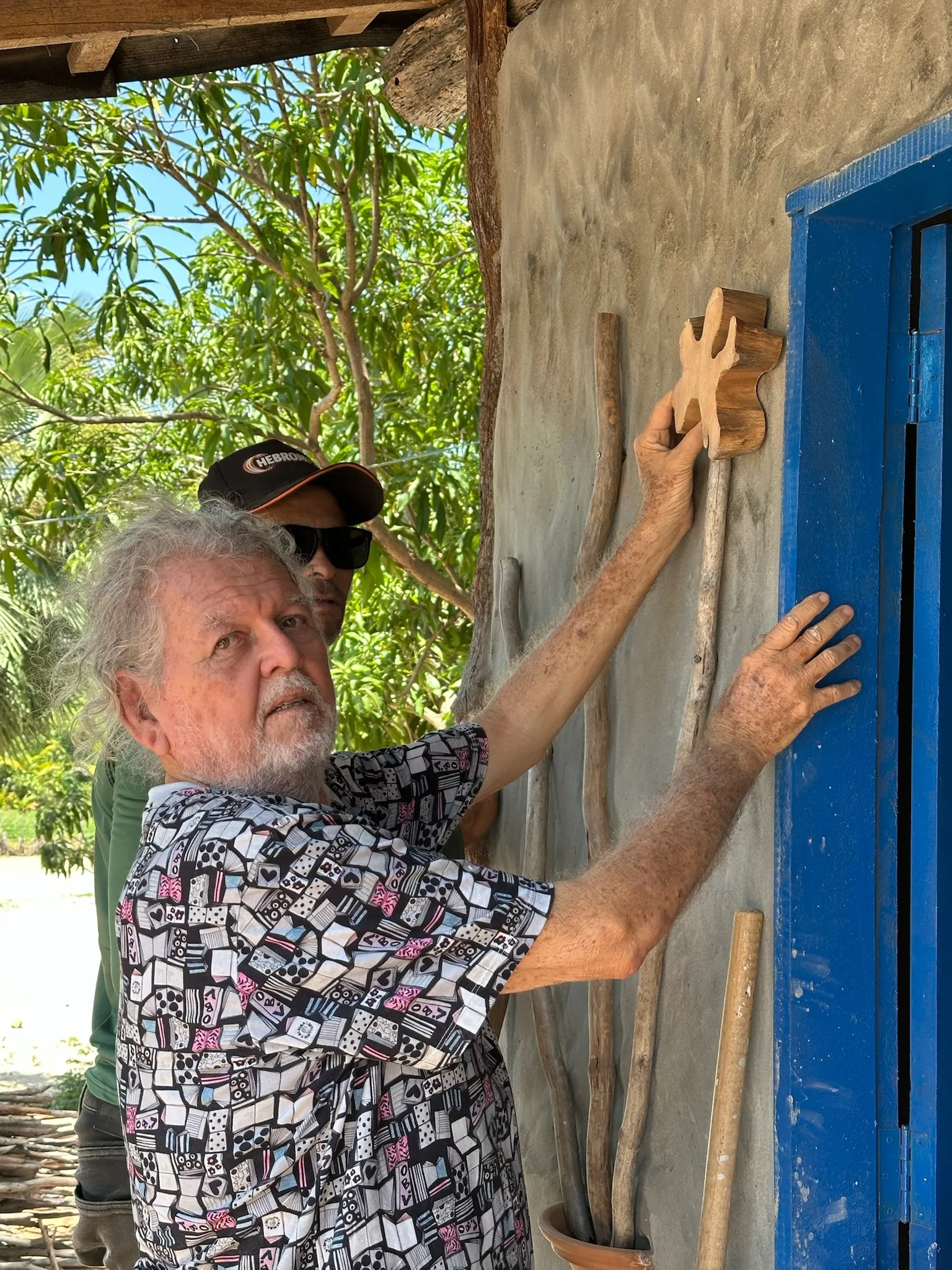
Today
Open to guests since the early 2000s
The Rancho grew slowly, and more than two decades on it still has the same feel: simple and rustic, but comfortable.
The peacocks came, then the donkeys, the ducks and the chickens — and they stayed. The grove became home to free-roaming animals and to guests who keep coming back. In the end, you can’t separate the place from the man who built it. You feel it as soon as you arrive: the Rancho was raised with the people who would sleep here in mind.
Animals roaming free, guests who come back, wood given a second life: none of this is a sustainability concept printed on a sign. It’s simply the way Buna always did things.
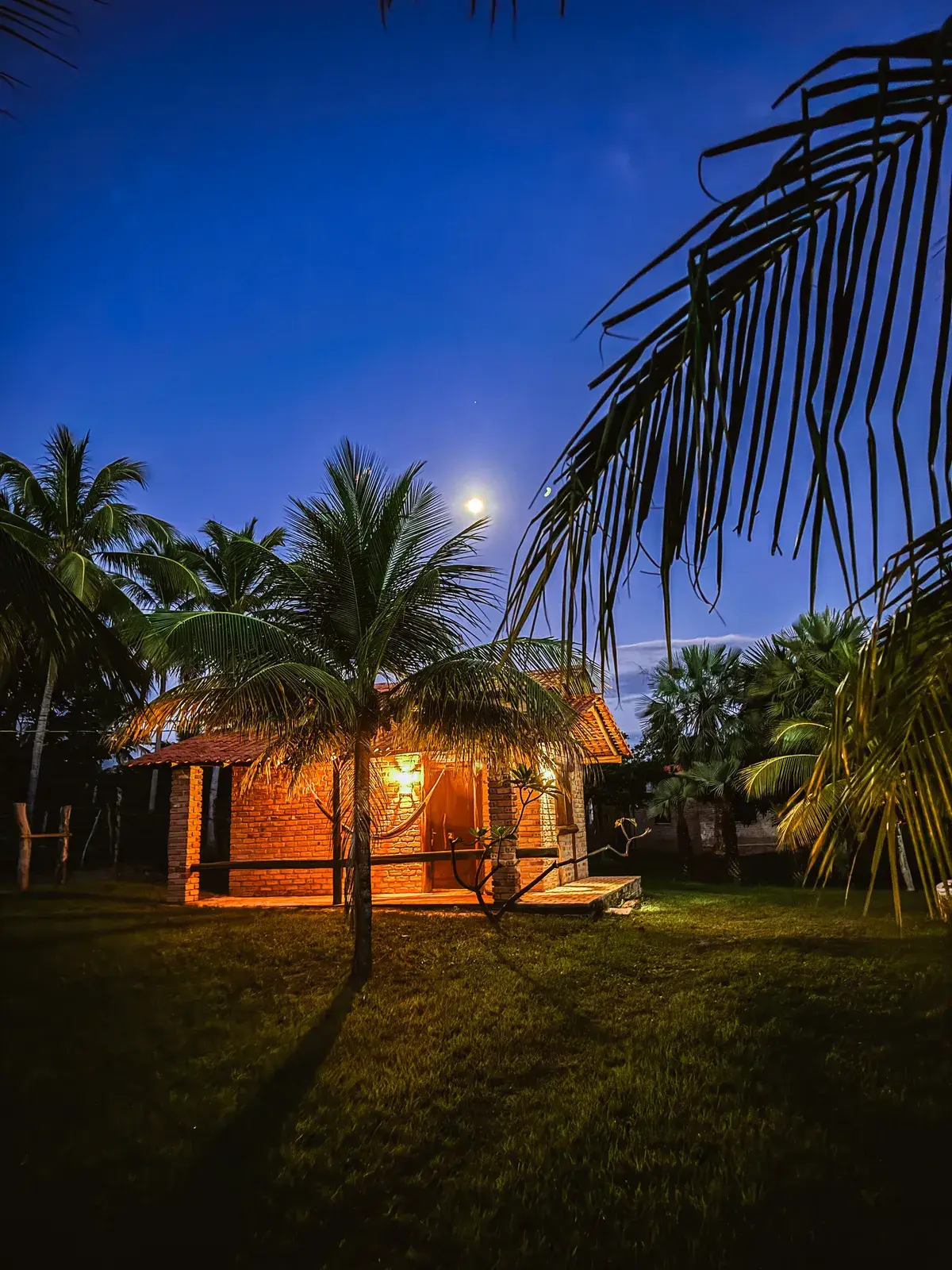

From our story
Little by little: one chalet, one carving at a time.

What our guests say
Life at the Rancho
Booking.com
- 8.4overall score
- 137reviews
Staff rated 9.1
“Very nice place, lot of nature and animals in the Rancho. Breakfast also is super good!”“The property is beautiful, clean and they have a pool. Lovely breakfast with fresh fruit, yoghurt, eggs, bread, cheese and more in the morning. What more can you wish for?”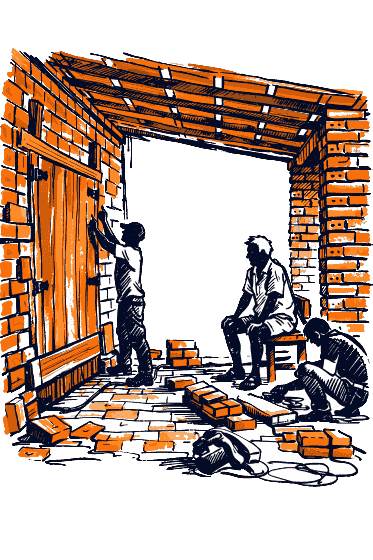

Come and visit the Rancho
You’ve read the story. Now all that’s left is to sleep inside it.
Request a quote on WhatsApp View roomsNo middleman, no commission: the best rate is always here. We reply in English, usually within a few hours during the day.Breakfast included · Children and pets welcome · Pix, card or cash on arrival